 Bribery and Corruption of public officials and priests facilitated Elgin’s theft of grave markers and other sacrilegious acts.
The “Report From The Select Committee on The Earl of Elgin’s Collection of Sculptured Marbles &c.” contains various contradictory sets of accounts from Elgin purporting to be his expenses for excavating and transporting the hundreds, even thousands of pieces of structural marble, tomb headstones, altars, burial urns, medals etc.
Elgin sought repayment for this and within his bill to Parliament there is reference to amounts of cash being paid to public officials. In one case he claimed 21,902 Piastres for “Presents found necessary for the local authorities, in Athens alone” LINK
Though Hunt in evidence to the Select Committee denied any knowledge of paying money to officials (he said he only gave them presents) he did admit that presents were given to the Voivode at the time the firman was presented to him. Hunt in his evidence to the committee was unable to be sufficiently precise as to estimate the amount “incurred in the way of bribes, either in obtaining the fermaun at Constantinople, or on acting upon it at Athens“. Rather tellingly when Hunt was asked if the firman specifically gave him authority to remove sculptures from the walls of the temples he replied: “That was the interpretation that the Voivode of Athens was induced to allow it to bear“.
Hunt was responsible for most of the ‘fixing’ by inducement of local officials in Athens and while much is attributed to Elgin personally that is not the case, as quite simply he was not in Athens until most of the damage had been done. The Right Honourable Lord Broughton in his book “Travels in Albania” published in 1858 attributes most of the removal of holy relics from Athens to Elgin and states: “The sun-dial and the Gymnasiarch’s chair were taken by Lord Elgin from the court of the Catholicon,” however that is contradicted by Hunt in his letters where he states: “My friendship with the Bishop of Athens, gained me permission to examine the interior of all the Churches and Convents in Athens. This search furnished many valuable bas-reliefs, inscriptions, ancient dials, a Gymnasiarch’s chair in marble,“ etc.
Whatever the identity of the actual briber the responsibility for all of their actions must be borne by Elgin. He and/or members of his party admitted to bribing Turkish officials in the occupied city of Athens and other occupied territories to allow the unauthorised or illegal removal of all manner of items including sacred items such as altars, tomb headstones (Hunt described as Cippi), and funereal urns. In order to do the latter it would have been necessary to dig up the graves of the dead. There is no other way to describe it but grave robbery facilitated by bribery and corruption.
The extent to which the members of parliament disapproved of Elgin’s bribery and corruption is softened by the fact that a price was agreed to buy the marbles collection by the Supply Committee on 7 June 1816. The anodyne summary of that decision is often referred to by historians, but the actual anger and condemnation by contributors to the debate is more insightful as it suggests that a decision was taken by then to “hold their noses” while voting approval for something they knew reeked with wrongdoing.
In the report of proceedings from The Times (whose editor was a fulsome supporter of Elgin) the evidence of Hugh Hammersley was reported thus:
“opposed the measure [purchase], principally on account of the dishonourable means by which these specimens of ancient art had been acquired”
“he was not so much enamoured of these headless ladies as to forget another—Justice.”
“even the authority granted to Lord Elgin was by no means of so extensive a nature as had been pretended; a very slight knowledge of Italian would acquaint a reader, that quelche (the word used in the authority granted) meant some and not any.”
“If at any time Greece should recover her rank among the states of Europe, what would be her feelings against that nation which had stripped her temples and altars of all the relics of their glory, and this by the hand of the representatives of the sovereign himself!”
“a British ambassador could thus take advantage of the feelings of a grateful people, and could urge service to be done, with the express view of pillaging them of all the remains of their glory!”
“proof that a nation which held itself out as a paragon of honour in all its transactions had been guilty of a robbery, one most undisguised and inexcusable.”
“Government had been extremely negligent in not restraining the noble earl from his work of spoliation, which was a stain on the character of the country; he wished it to be wiped out with the last shilling we possessed, and he trusted the house would not place in the British Museum a monument of our eternal disgrace.”
“The plain state of the case was, that a British ambassador had acquired these articles by bribery; and now the British parliament wished to return this bribe, and retain the plunder.”
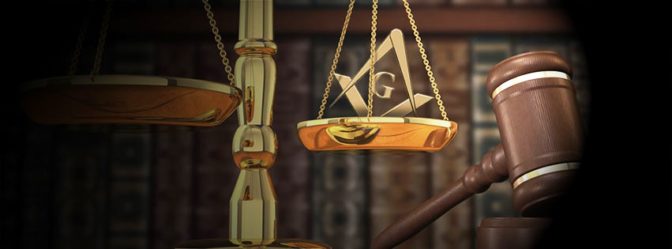
But as critical as the nobles who made up the parliament’s membership were of their fellow member and peer they apparently came to the assistance of their brother in distress out of fraternal loyalty as parliamentarians and possibly out of the more formal obligations as freemasons to whom Lord Elgin, as Grand Master Mason of Scotland and First Principal of the Royal Arch, was their superior brother. LINK
Respect for the dead and respect for one’s ancestors is a universal trait of all civilised people. One can understand how the current Earl of Elgin would defend his infamous ancestor, but it is sad to note that he thinks fit to do so in interviews given to the press whilst posing for photographs in his study at Broomhall where the walls are lined with ancient Greek stele or grave markers. Memorial stones that once paid respect to Athenian and other Greek people acting as decorations. The kindest interpretation one could place on these actions would be to attribute them to ignorance. Perhaps the Earl simply does not understand the offence he causes to most right-minded people, and particularly those descendants of the dead, whose sacred memorial stones–in some instances admittedly obtained by bribing priests–decorate his walls.
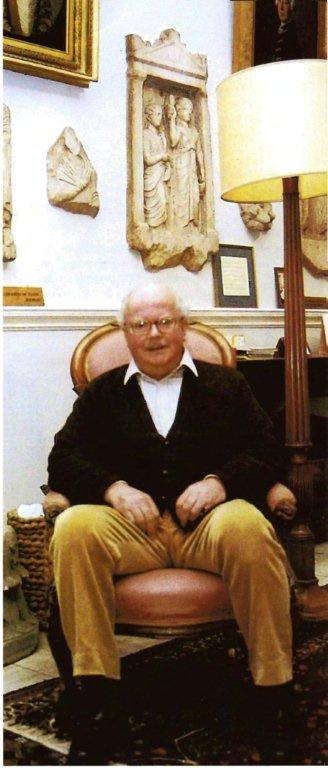 Pic from “Freemasonry Today” the 11th Earl at home with the grave markers of ancient Greeks